Minggu, 22 April 2012

Ci Hua Hua Dog

Today we talk about a tiny dog which is very cute and small.


cihuahua have a small head and unique eyes and ears. this dog sometime compared with hamster. this dog grows as tall as 30 to 38 centimeters. cihuahua must not weight more than 6 pounds. This dog must be chosen with care. You need to be morecarefull because this dog is very temperament and easy to be provoked.


Happy Kartini Day!!


sorry i'm late to post it's my bad :(

Sabtu, 14 April 2012

Oldest Dog In The World

The Oldest Dog In The World


Owner Yumiko Shinohara told reporters at her home in Sakura, a city outside Tokyo, that Pusuke, a fluffy tan Shiba mix, died Monday after suddenly falling ill and refusing to eat.
Shinohara told TV network FNN that she "would just like to thank him for staying alive so long." The report said Pusuke's life span would have been the equivalent of about 125 years for a human.
According to Guinness, the dog was born April 1, 1985. Pusuke was recognized as the world's oldest living.


Happy Easter Day!!!


Bye..

Minggu, 08 April 2012

How To Train Your Dog

Hello guys today i want to tell you about how to train your dog. its a simple way to train your dog.


At the first time you need to be patient and try to talk to your dog. you need some food for your dog reward after it complete your instruction. i give some tips for you.

1. make a eye contac

2. if the dog dont know your instruction use your hand to push them to be a position that you want.

3. try to talk to your dog.

4. give them food for reward.

5.give them softly touch.

6. try from basic instruction like sit,shake hand,lie down,..

okay thats my tips, good luck guys.

Sorry i'm late to post this tips, wish you like this.

Sabtu, 31 Maret 2012

NEXT 5 UNIQUE DOG!!

Hello all my friends, today i will share about next 5 unique dog. Lets start.. :)


6. Berger Picard

With its tousled appearance, the Berger Picard – star of the movie ‘Because of Winn-Dixie’ - is often mistaken for a mutt. Don’t let this dog’s low-maintenance look fool you. This canine boasts a proud French pedigree. Traditionally a sheepdog, the Berger Picard (pronounced Bare zhay Peecar) almost disappeared after World War II. Fortunately, breed fanciers are re-establishing its presence not only in France, but worldwide. Quiet, loyal, and athletic, the Berger craves attention, and often displays comical behaviour


7. Boykin Spaniel

With its gold eyes, and soft, chocolate-coloured coat, the Boykin Spaniel could easily be discounted as just a pretty household pet - but this breed is no lap dog. Hard-working and spirited, this spaniel is a seasoned hunting companion. Bred for tracking wild turkeys, the Boykin first appeared in the south-eastern United States during the early 20th century. Recognized as the state dog of South Carolina, the Boykin Spaniel has a friendly personality, and adores children


8. Chinese Crested

Surprise! The Chinese Crested isn’t from China. Experts believe that this small breed originated in Central America. Used as ratters on ships along Mexico’s coast, the dogs were often traded for goods. Chinese boat crews adored these canines. By the 18th century, people mistakenly thought that this elegant breed was Asian. There are two types of Chinese Crested dogs: the hairless, and powderpuff. A single litter of puppies can produce both varieties


9. Leonberger

Originating in Germany in the mid-1800s, the Leonberger was a favourite of European royals. Strong and imposing, this household guardian closely resembled a lion. Today, its affectionate manner makes him an excellent therapy dog, or children’s companion. But don’t be mislead by his cuddly disposition - prospective owners must train this pet properly. With many Leonbergers weighing over 120-lbs., they naturally believe that they’re the boss.


10. Icelandic Sheepdog

Iceland’s native dog is not only unique, but rare. Rescued from the brink of extinction in the 1950s, the Icelandic Sheepdog is slowly increasing in numbers. A natural herder, the breed is alert, intelligent, and enthusiastic. Friendly with other animals, and gentle with children, the Icelandic forms strong bonds with its master. Occasionally, this attachment can cause separation anxiety, and excess barking. With a gentle touch, a skilled owner can teach their Icelandic Sheepdog to be calm in their absence.

So thats all about unique dog that i know, wish you happy and get more knowledge about unique dog.
Thanks for reading my post !

Jumat, 23 Maret 2012

5 UNIQUE DOG!!!

Today i want tell you about dog especially unique dong in the world. This is the first 5 dog racist. Wish you happy!!


1. Ibizan Hound

Graceful and deer-like, the Ibizan Hound is distinctive. With amber eyes, large ears, and red and white fur, this Spanish breed boasts two varieties: the smooth, or wiry coat. Originally bred to hunt rabbits, this canine is quiet, and good with kids, but requires a home with high fences. An Ibizan can easily sail over barriers of 5-feet or more

2. Cane Corso

Dating back to 600 AD Italy, the Cane Corso (pronounced Connie Corso) descends from Roman war dogs. Its large, athletic build, and strong work ethic made this canine ideal for herding, hunting, and guarding. Almost extinct in the 1980s, the breed is now making a welcome comeback. Suspicious of strangers yet devoted to its master, the Cane Corso requires an experienced dog owner who can h`ndle its protective instincts

3. Schipperke


Small and energetic, the Schipperke (pronounced Skipper-key) is native to Belgium. Adored for its inquisitive personality, and beautiful coat, ‘the little black devil’ was a vermin hunter. Today, they’re regarded as happy, loyal companions. Their sassy demeanour, and enthusiasm for mischief requires a dedicated owner who will supervise its adventures. Schipperkes are talented escape artists - a well-fenced yard, and on-leash walks are a must.

4. Coton de Tulear

Known as the Royal Dog of Madagascar, the Coton de Tulear (pronounced Cu-toe de Too-lay-are)  dates back several centuries. Sharing ancestors with the Maltese, and Bichon Frise, this happy-go-lucky pup historically served as a royal pet. Sociable and smart, the Coton often behaves like a little, furry clown. Their bouncy antics, and tireless energy are endearing, but owners must be careful not to fall completely under their Coton’s spell - this fun-loving breed will take advantage of a lenient master

5. Tibetan Mastiff

Hailing from China, the Tibetan Mastiff is an ancient breed. An extremely protective, intelligent, and independent dog, he prefers to make his own decisions, and is not easily trained. Walking off-leash, obeying commands, and trusting strangers are challenges with this majestic canine. The Tibetan can be a wonderful pet under the supervision of a knowledgeable, and dedicated owner.

Sabtu, 17 Maret 2012

Siberian Husky

Hello guys now i will tell you about Siberian Husky dog


now this dog is very popular in indonesia since 2006. this dog have a nice fur and tail. This dog need to sleep at a cool wheather under 20 degrees. this dog is use to drag a cart at ice land. This dog is come from Rusia. This dog is very smart and easy to be train, but becaus of this dog intteligence this dog is easy to be bored and somtimes this dog stop to listening the owner request. this dog is very strong . This dog can life 12-15 years. at 1938 Siberian Husky club was built at America. This dog have a funny and friendly typical and easy to learn something new. This dog is look like a wolf, but its very tame not like a wolf. So this is for my knowledge about Siberian Husky, wish you will more know about Husky. Next time I will share another dog for you all.. bye..

Kamis, 08 Maret 2012

DO YOU KNOW??

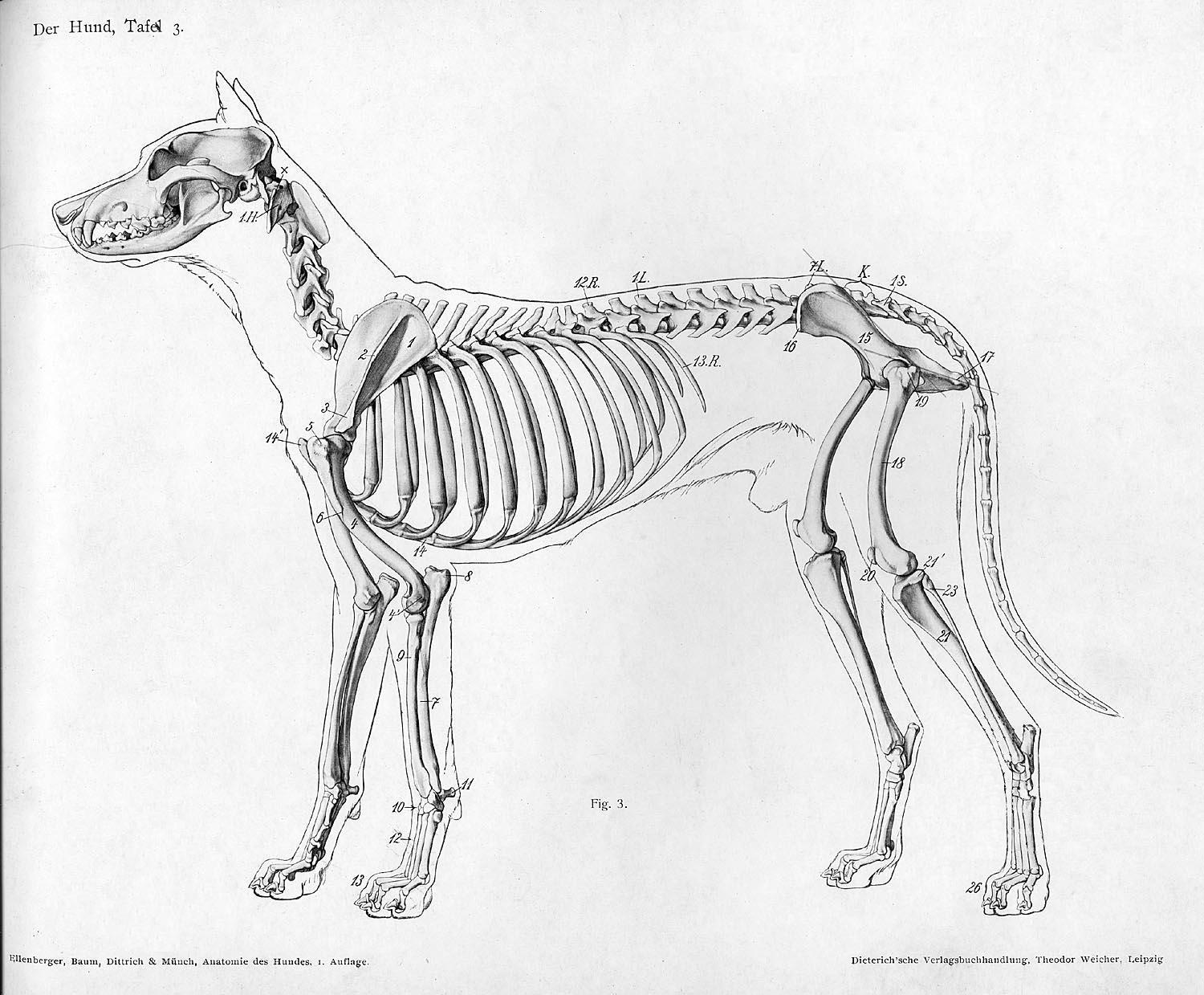
Do you know that a dog have a great physical anatomy.

File:Dog anatomy lateral skeleton view.jpg
Like most predatory mammals, the dog has powerful muscles, a cardiovascular system that supports both sprinting and endurance, and teeth for catching, holding, and tearing.
The dog's ancestral skeleton provided the ability to jump and leap. Their legs can propel them forward rapidly, leaping as necessary to chase and overcome prey. Consequently, they have small, tight feet, walking on their toes (thus having a digitigrade stance and locomotion); their rear legs are fairly rigid and sturdy; the front legs are loose and flexible, with only muscle attaching them to the torso.
All dogs (and all living Canidae) have a ligament connecting the spinous process of their first thoracic (or chest) vertebrae to the back of the axis bone (second cervical or neck bone), which supports the weight of the head without active muscle exertion, thus saving energy.  This ligament is analogous in function (but different in exact structural detail) to the nuchal ligament found in ungulates. This ligament allows dogs to carry their heads while running long distances, such as while following scent trails with their nose to the ground, without expending much energy.
Although selective breeding has changed the appearance of many breeds, all dogs retain the basic ingredients from their distant ancestors. Dogs have disconnected shoulder bones (lacking the collar bone of the human skeleton) that allow a greater stride length for running and leaping. They walk on four toes, front and back, and have vestigial dewclaws on their front legs and sometimes on their rear legs.When a dog has extra dewclaws in addition to the usual one on each front leg, the dog is said to be "double dewclawed".
There is some debate about whether a dewclaw helps dogs to gain traction when they run because, in some dogs, the dewclaw makes contact when they are running and the nail on the dewclaw often wears down in the same way that the nails on their other toes do, from contact with the ground. However, in many dogs the dewclaws never make contact with the ground; in this case, the dewclaw's nail never wears away, and it is then often trimmed to keep it to a safe length.
The dewclaws are not dead appendages. They can be used to lightly grip bones and other items that dogs hold with the paws. However, in some dogs these claws may not appear to be connected to the leg at all except by a flap of skin; in such dogs the claws do not have a use for gripping as the claw can easily fold or turn.
There is also some debate as to whether dewclaws should be surgically removed.The argument for removal states that dewclaws are a weak digit, barely attached to the leg, so that they can rip partway off or easily catch on something and break, which can be extremely painful and prone to infection. Others say the pain of removing a dewclaw is far greater than any other risk. For this reason, removal of dewclaws is illegal in many countries. There is, perhaps, an exception for hunting dogs, who can sometimes tear the dewclaw while running in overgrown vegetation. If a dewclaw is to be removed, this should be done when the dog is a puppy, sometimes as young as 3 days old, though it can also be performed on older dogs if necessary (though the surgery may be more difficult then). The surgery is fairly straightforward and may even be done with only local anesthetics if the digit is not well connected to the leg. Unfortunately many dogs can't resist licking at their sore paws following the surgery, so owners need to remain vigilant.
In addition, for those dogs whose dewclaws make contact with the ground when they run, it is possible that removing them could be a disadvantage for a dog's speed in running and changing of direction, particularly in performance dog sports such as dog agility.dog always think to run as fast as posible
The dog's ancestor was about the size of a Dingo, and its skeleton took about 10 months to mature. Today's toy breeds have skeletons that mature in only a few months, while giant breeds such as the Mastiffs take 16 to 18 months for the skeleton to mature. Dwarfism has affected the proportions of some breeds' skeletons, as in the Basset Hound.
Knowledge of basic anatomy also helps when competing in dog shows or contests. A dog with a good condition and great bones structure have a beautifull step when the dog walk at contest podium.
So we can see the surplus of the dog from how the dog walk.